

Diminutive Endings

Diminutive noun endings in German are used for a smaller version of something, or just to communicate cuteness, informality or affection. We don't have many diminutive endings in English, and the ones we do have are usually just a matter of size, without the other connotations: for example, let as in "piglet" or "booklet."

There are many different diminutive endings in regional German dialects, some of which you've already heard -- like the li in muesli cereal or the el in Hansel & Gretel. But there are only two in standard German: chen and lein.

You need to remember three main things about chen and lein:

 * they always make the noun neuter;
 * they never change in the plural; and
 * they usually add an umlaut to the base word when they can.

Here are a few examples:

der Tisch,  table
das Tischlein,  small table
die Tischlein, small tables

die Maus,  mouse
das Mäuschen,  (cute) little mouse
die Mäuschen,  (cute) little mice

das Brot,  bread
das Brötchen,  bread roll
die Brötchen, bread rolls

https://germanforenglishspeakers.com/nouns/diminutive-endings/
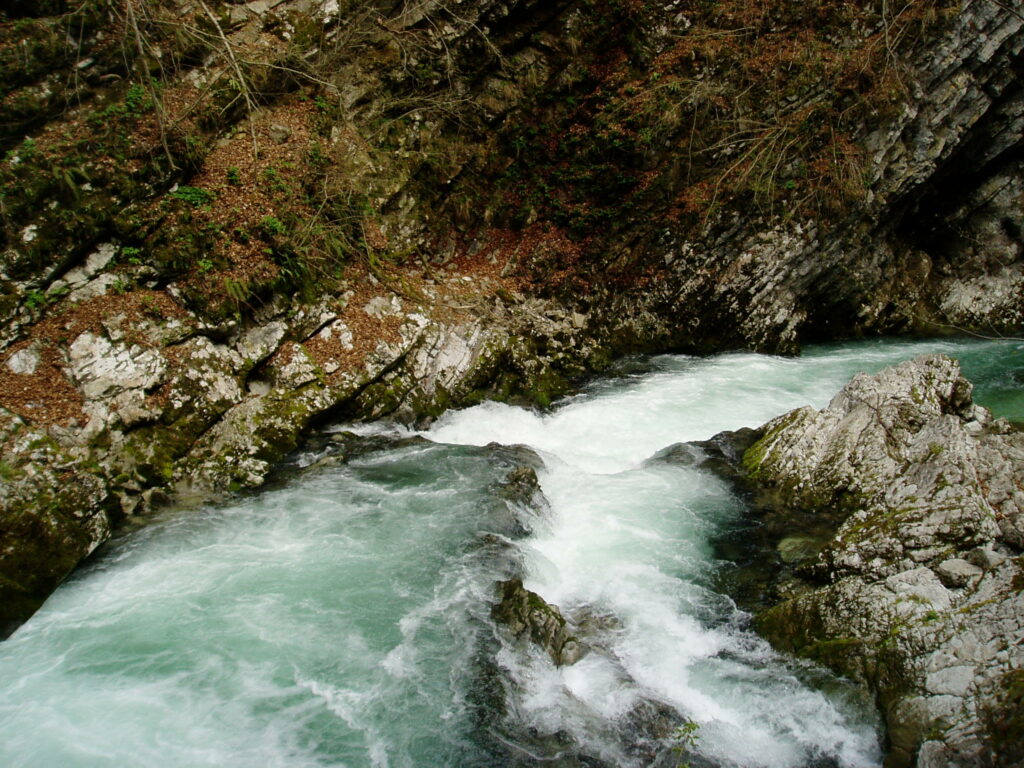
A Bächlein is therefore a diminutive Bach, and a Bach is a small(ish) stream, a river that is probably shallow enough to be forded and not deep or broad enough to be navigable. In English we are unlikely to think of streamlets as cute or twee, and nor do we share the connotations of German speakers, who might associate a Bächlein with a little child who wants to go to the toilet (Mutti, ich möchte gern ein Bächlein machen – ‘Mummy, I need to do a wee wee’ / ‘I need to make a piddle’).
A number of the wee streams in the Schubert song texts are simply diminutive in the literal sense; they are small but there may be no overtones of affection or tweeness.
In einem Bächlein helle,
Da schoss in froher Eil
Die launische Forelle
Vorüber wie ein Pfeil.
Ich stand an dem Gestade
Und sah in süsser Ruh
Des muntern Fischleins Bade
Im klaren Bächlein zu.

In a bright little stream
Shooting past in carefree haste
Was a capricious trout,
Going off like an arrow:
I stood by the edge of the water
And in sweet peace I watched
The lively little fish as it bathed
In the clear little stream.

Schubart, Die Forelle		D 550
However, in many other texts the poetic persona associates the little brook with his or her own tender emotions. The diminutive does not express affection, exactly. It is more that it is an outer manifestation of an inner sensitivity.
Ich hab ein Bächlein funden
   Vom Städtchen ziemlich weit,
Da bin ich manche Stunden
   In stiller Einsamkeit.
Ich tät mir gleich erkiesen
   Ein Plätzchen kühles Moos,
Da sitz ich, und da fließen
   Mir Tränen in den Schoß.

I have found a little brook
Quite a distance away from my small town,
I spend quite a few hours there
In quiet solitude.
I soon set about choosing
A little spot on the cool moss;
I sit there, and that is where
Tears fall down into my lap.

Stolberg-Stolberg, Daphne am Bach 	D 411


Siehe, wie die Mondesstrahlen
Busch und Flur in Silber malen!
Wie das Bächlein rollt und flimmt,
Strahlen regnen, Funken schmettern
Von den sanft geregten Blättern,
Und die Tauflur glänzt und glimmt.
Glänzend erdämmern der Berge Gipfel,
Glänzend der Pappeln wogende Wipfel.

Durch die glanzberauschten Räume
Flüstern Stimmen, gaukeln Träume,
Sprechen mir vertraulich zu.
Seligkeit, die mich gemahnet,
Höchste Lust, die süß mich schwanet,
Sprich, wo blühst, wo zeitigst du?
Sprenge die Brust nicht, mächtiges Dehnen;
Löschet die Wehmut, labende Tränen.

Look at how the rays of the moon
Are painting the bushes and grass silver!
How the little brook is rolling and shimmering!
Rays are raining down, sparks are bursting
From the gently stirred leaves,
And the dewy turf is glowing and shimmering.
The mountain peaks shimmer in the twilight,
The swaying tops of the poplars are aglow.

Through the space that is glowing in astonishment
Voices whisper and dreams flit about
Speaking to me in a confidential way.
Bliss, which reminds me,
Highest delight, which gives me sweet presentiments,
Tell me, where do you blossom, where do you ripen?
Do not burst my breast, powerful stretching!
Soothe the sadness, refreshing tears.

Kosegarten, Der Mondnacht		D 238

Bächlein so munter
Rauschend zumal,
Wollen hinunter
Silbern ins Tal.
Die schwebende Welle, dort eilt sie dahin!
Tief spiegeln sich Fluren und Himmel darin.
Was ziehst du mich, sehnend verlangender Sinn,
Hinab?

Little streams, so cheerful,
Babbling along,
Wanting to go down
On their silver paths into the valley.
The floating waves, they are hurrying off down there!
The fields and the sky are mirrored in them deep down.
Why are you pulling me, you mood of longing and yearning,
Pulling me down?

Rellstab, Frühlingssehnsucht		D 957/3
In another Rellstab text the speaker also addresses a Bächlein directly, treating it as an intimate associate and go-between:
Rauschendes Bächlein,
So silbern und hell,
Eilst zur Geliebten
So munter und schnell?
Ach, trautes Bächlein,
Mein Bote sei du;
Bringe die Grüße
Des Fernen ihr zu.

All ihre Blumen
Im Garten gepflegt,
Die sie so lieblich
Am Busen trägt,
Und ihre Rosen
In purpurner Glut,
Bächlein, erquicke
Mit kühlender Flut.

Babbling little stream,
So silver and bright,
Are you rushing to my beloved
So cheerfully and quickly?
Oh dearest little stream
Be my messenger;
Take my greetings
From afar to her.

All her flowers
Looked after in the garden,
Which she so lovingly
Wears on her breast,
And her roses
With their crimson glow,
Little stream, refresh them
With your cooling waters.

Rellstab, Liebesbotschaft	D 957/1
The narrator in Müller´s Die schöne Müllerin has an even more intense and intimate relationship with the stream that links him (he feels) with his beloved. As he sets off on his ‘Wanderjahre’ (his itinerant apprenticeship) he follows the babbling of a brook as it turns from a Bächlein into a Bach, and it eventually leads him to a water mill, where his fate will be decided.
Ich hört' ein Bächlein rauschen
Wohl aus dem Felsenquell,
Hinab zum Tale rauschen
So frisch und wunderhell.

Ich weiß nicht, wie mir wurde,
Nicht, wer den Rat mir gab,
Ich musste auch hinunter
Mit meinem Wanderstab.

Hinunter und immer weiter,
Und immer dem Bache nach,
Und immer heller rauschte,
Und immer heller der Bach.

Ist das denn meine Straße?
O Bächlein, sprich, wohin?
Du hast mit deinem Rauschen
Mir ganz berauscht den Sinn.

I heard a brook babbling
As it emerged from the spring in the rocks,
Babbling down towards the valley
So fresh and wonderfully bright.

I do not know how it happened to me
Or who gave me the advice,
But I had to go down too
With my walking stick.

Down and further on,
And following the little river on and on,
And it babbled more and more brightly,
And the little river became brighter and brighter.

So, is that the road I have to take?
Little brook, speak, where to?
With your babbling you have
Completely addled my senses.

Müller, Wohin? 	D 795/2
We are dealing with a character who over-interprets and who is convinced that the water and vegetation around him are passing him secret messages. The brook’s ‘babbling’ can be interpreted by those who have ears to hear, but what is it saying? Are water nymphs singing? Is it an invitation?
Eine Mühle seh ich blinken
Aus den Erlen heraus,
Durch Rauschen und Singen
Bricht Rädergebraus.

Ei willkommen, ei willkommen,
Süßer Mühlengesang.
Und das Haus wie so traulich,
Und die Fenster, wie blank,

Und die Sonne, wie helle
Vom Himmel sie scheint.
Ei, Bächlein, liebes Bächlein,
War es also gemeint?

I can see a mill gleaming
Out from behind the alder trees,
Through the babbling and singing
You can hear the noise of the wheels.

Welcome, welcome,
Sweet song of the mill.
And the house - how cosy it is.
And the windows - how shiny.

And the sun, how brightly
It is shining down from the sky.
Little brook, dear little brook,
Is this how it was meant to be?

Müller, Halt!	D 795/3

War es also gemeint,
Mein rauschender Freund,
Dein Singen, dein Klingen,
War es also gemeint?

Zur Müllerin hin!
So lautet der Sinn,
Gelt, hab ich's verstanden?
Zur Müllerin hin.

Hat sie dich geschickt,
Oder hast mich berückt,
Das möcht ich noch wissen,
Ob sie dich geschickt.

Is this how it was meant to be,
My babbling friend,
Your singing, your ringing,
Is this what it meant?

Off to the miller girl!
That is the meaning.
I have understood correctly, haven't I?
Off to the miller girl!

Did she send you?
Or have you cast a spell on me?
That is what I would still like to know,
Whether she sent you.

Müller, Danksagung an den Bach	D 795/4
So, that was the meaning all along. It was meant to be. The little stream has made the inevitable connection and the young lad sees his whole future laid out for him. The babbling brook can never be just the sound of water for him, it is the siren voice of the young woman who has always been calling him.
Even when the doubts about the girl’s devotion to the young miller begin to creep in, it does not occur to him that he should question his belief in the brook itself. Indeed, that is the only place where he feels he can turn for guidance.
Ich frage keine Blume,
Ich frage keinen Stern,
Sie können mir alle nicht sagen,
Was ich erführ so gern.

Ich bin ja auch kein Gärtner,
Die Sterne stehn zu hoch;
Mein Bächlein will ich fragen,
Ob mich mein Herz belog.

O Bächlein meiner Liebe,
Wie bist du heut so stumm!
Will ja nur Eines wissen,
Ein Wörtchen um und um.

Ja, heißt das eine Wörtchen,
Das andre heißet Nein,
Die beiden Wörtchen schließen
Die ganze Welt mir ein.

O Bächlein meiner Liebe,
Was bist du wunderlich!
Will's ja nicht weiter sagen,
Sag  Bächlein, liebt sie mich?

I am not asking any flower,
I am not asking any star,
None of them can tell me
What I would so much like to know.

Anyway, I am not a gardener,
The stars are too high up;
I shall ask my little brook
Whether my heart is deceiving me.

Dear little brook of my love,
How quiet you are today!
I would just like to know one thing,
One little word, which is going around and around.

One of the words is 'yes',
The other is 'no',
Both of these words make up
The whole of the world for me.

Dear little brook of my love,
How strange you are!
Won't you tell me any more?
Tell me, little brook, does she love me?

Müller, Der Neugierige  	D 795/6
By now the young miller is in no psychological state to take ‘no’ for an answer. He becomes convinced that the voices in the stream have told him what he so much wanted to hear, that the girl is ‘his’ (Mein, D 795/11). When all of the objective evidence begins to point to the fact that she is in fact more interested in a huntsman than in the young apprentice the cognitive dissonance becomes acute.
There is a final attempt to commission the Bächlein to pass on a confidential message in Eifersucht und Stolz (D 795/15):
Wohin so schnell, so kraus und wild, mein lieber Bach?
Eilst du voll Zorn dem frechen Bruder Jäger nach?
Kehr um, kehr um, und schilt erst deine Müllerin
Für ihren leichten, losen, kleinen Flattersinn.
Sahst du sie gestern Abend nicht am Tore stehn,
Mit langem Halse nach der großen Straße sehn?
Wenn von dem Fang der Jäger lustig zieht nach Haus,
Da steckt kein sittsam Kind den Kopf zum Fenster 'naus,
Geh Bächlein hin und sag ihr das, doch sag ihr nicht,
Hörst du, kein Wort, von meinem traurigen Gesicht,
Sag ihr: Er schnitzt bei mir sich eine Pfeif aus Rohr
Und bläst den Kindern schöne Tänz und Lieder vor.

My dear little river, where are you going so quickly, so ruffled, so savage?
Are you hurrying off, full of anger, to look for that cheeky brother the huntsman?
Turn round, turn round, and first of all rebuke your miller girl
For being so silly, so shallow, so inconstant.
Did you not see her standing by the gate last night
Stretching her neck to look down the main road?
When huntsmen return home merrily after a day's shooting
No obedient child should stretch her head out of the window.
Go off, dear little river, and talk to her, but do not tell her
Anything about my sad face, not a word, do you hear?
Say to her, "He has been sitting next to me cutting a reed pipe,
And he is blowing on it, playing beautiful dances and songs for the children."

Müller, Eifersucht und Stolz	D 795/15
However, the situation cannot be retrieved. All that remains for the deluded young man is to join the voices at the bottom of the stream and for it to sing a final lullaby over him.
Ach, Bächlein, liebes Bächlein,
 Du meinst es so gut,
 Ach, Bächlein, aber weißt du,
 Wie Liebe tut?

 Ach, unten, da unten,
 Die kühle Ruh,
 Ach, Bächlein, liebes Bächlein,
 So singe nur zu.

Oh, little brook, dear little brook,
You have such good intentions:
Oh, little brook, but do you know
What love does?

Oh, down, down there,
Cool rest!
Oh, little brook, dear little brook,
Carry on singing like that.

Müller, Der Müller und der Bach 	D 795/19

Gute Ruh, gute Ruh,
Tu die Augen zu!
Wandrer, du müder, du bist zu Haus.
Die Treu ist hier,
Sollst liegen bei mir,
Bis das Meer will trinken die Bächlein aus.

Sleep well, sleep well!
Close your eyes!
Traveller, you are tired, you are at home.
Faithfulness is here,
You should lie down with me,
Until the sea drinks up the little brooks.

Müller, Des Baches Wiegenlied	D 795/20
☙
Descendant of:
WaterTexts with this theme:
- Ammenlied, D 122 (Michael Lubi)
- Seufzer, D 198 (Ludwig Christoph Heinrich Hölty and Johann Heinrich Voß)
- Die Mondnacht, D 238 (Ludwig Theobul Kosegarten)
- Daphne am Bach, D 411 (Friedrich Leopold Graf zu Stolberg-Stolberg)
- Die Forelle, D 550 (Christian Friedrich Daniel Schubart)
- Der Jüngling auf dem Hügel, D 702 (Heinrich Hüttenbrenner)
- Wohin? D 795/2 (Wilhelm Müller)
- Halt! D 795/3 (Wilhelm Müller)
- Der Neugierige, D 795/6 (Wilhelm Müller)
- Mein! D 795/11 (Wilhelm Müller)
- Eifersucht und Stolz, D 795/15 (Wilhelm Müller)
- Der Müller und der Bach, D 795/19 (Wilhelm Müller)
- Wasserflut, D 911/6 (Wilhelm Müller)
- Liebesbotschaft, D 957/1 (Ludwig Rellstab)
- Frühlingssehnsucht, D 957/3 (Ludwig Rellstab)
- Der Graf von Habsburg, D 990 (Friedrich von Schiller)