

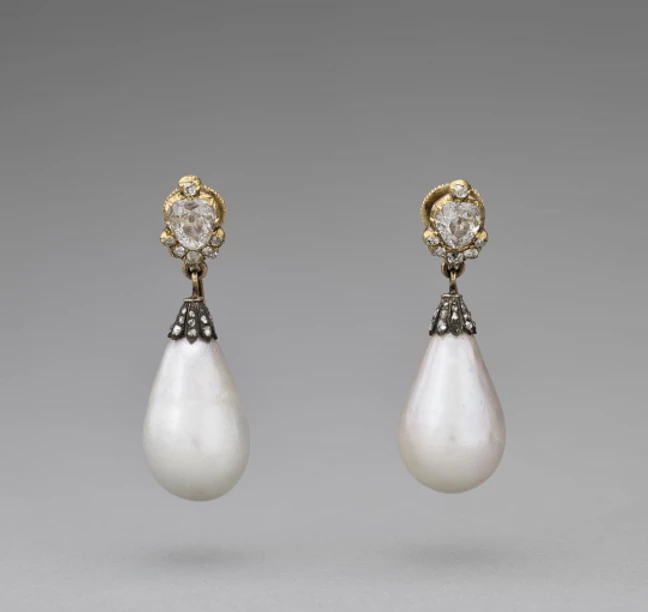
Pearls have captivated humanity for thousands of years with their natural perfection and luminous beauty. This comprehensive guide explores the rich symbolism and cultural significance these organic gems have acquired throughout history.

. . .

What Are Pearls? Understanding Their Unique Formation

Unlike most treasured gems that form beneath the earth's surface, pearls are gems but not stones. First documented by Chinese historians in 2,206 BCE, pearls have held gemstone status for thousands of years despite their distinctive origins. While diamonds, emeralds, rubies, and sapphires develop as minerals underground, pearls form organically within various freshwater and saltwater mollusks. Ancient civilizations, however, rarely distinguished between pearls and mineral gemstones.

Pearl Symbolism and Lunar Connections: The Moon Gems

The perfectly round, luminous appearance of pearls—particularly saltwater varieties—creates an undeniable visual connection to the moon.

While freshwater pearls often develop in varied and unusual shapes, the soft white orbs commonly found among saltwater pearls have become the idealized form, strongly evoking lunar imagery that influences their symbolic meaning across cultures.

In ancient Vedic texts, the pearl is born of the Earth's waters and the heaven's powers, fertilized by a flash of lightning. It's considered to be the daughter of the Moon. In Western cultures, the pearl has astrological associations with the planet Venus. Like pearls, the goddess of love came from the sea.

Do Pearls Represent Tears? The Watery Origins in Mythology

The smooth, droplet-like appearance of pearls has created enduring associations with tears throughout mythology. Some legends describe white pearls as divine tears shed by gods. One particularly poignant myth claims the tears Eve cried upon her banishment from Eden transformed into pearls. The water-born nature of pearls reinforces this emotional symbolism across diverse traditions.

What Do Pearls Symbolize About Wealth and Wisdom?

Natural pearls are extremely rare, which increases their value considerably. The quest for perfect pearls has continued for centuries, with evidence of pearl cultivation dating back to at least the 13th century CE.

Their historical scarcity influenced their symbolic connection to wealth in fascinating ways:
•	Ancient magical traditions included spells where practitioners would infuse fine pearls with desires for riches before discarding them—the act of throwing away something so valuable symbolized existing wealth.
•	Biblical references in Matthew 7:6 caution against "casting pearls before swine," warning against wasting valuable wisdom on those who cannot appreciate it.

The phrase "pearls of wisdom" derives from the era before perliculture when finding pearls required tremendous effort and luck.

. . .

What Do Pearls Symbolize About the Soul's Journey? Spiritual Meanings

Many ancient Asian cultures interpreted the seemingly miraculous appearance of perfect pearls within humble oysters as evidence of divine presence. Pearls represented the soul's journey toward perfection and enlightenment. Ancient burial customs included placing pearls in the mouths of the deceased to assist their spiritual journey beyond death. Mourners adorned burial clothes and gifts with pearls, beginning as practical decoration but evolving into deeply symbolic ritual.

. . .

By Fara Braid and Phoebe Shang (International Gem Society), updated April 2025

https://www.gemsociety.org/article/history-legend-pearls-gems-yore/
☙
Descendant of:
WATER OBJECTSTexts with this theme:
- Die Erscheinung, D 229 (Ludwig Theobul Kosegarten)
- Punschlied. Im Norden zu singen, D 253 (Friedrich von Schiller)
- Abendlied (Groß und rotentflammet), D 276 (Friedrich Leopold Graf zu Stolberg-Stolberg)
- Die Perle, D 466 (Johann Georg Jacobi)
- Die Blumensprache, D 519 (Anonymous / Unknown writer)
- Nach einem Gewitter, D 561 (Johann Baptist Mayrhofer)
- Das Dörfchen, D 598 (Gottfried August Bürger)
- Grablied für die Mutter, D 616 (Anonymous / Unknown writer)
- Das Fischermädchen, D 957/10 (Heinrich Heine)