

Seine Küsse - paradiesisch Fühlen!
Wie zwei Flammen sich ergreifen, wie
Harfentöne in einander spielen
Zu der himmelvollen Harmonie -

Stürzten, flogen, schmolzen Geist in Geist zusammen,
Lippen, Wangen brannten, zitterten,
Seele rann in Seele - Erd' und Himmel schwammen
Wie zerronnen um die Liebenden!

His kisses - the feeling of Paradise! -
Like two flames engulfing each other, like
The sounds of harps playing together
To make harmony that is full of heaven,

They plunged, they flew, spirit melted into spirit,
Lips and cheeks burned, trembled -
Soul flowed into soul - Earth and heaven swam
Around the lovers as if melting away.

Schiller, Amalia	(from Die Räuber)	D 195
On being told that her lover Karl is dead, Amalia recalls the kisses that united them. She draws on a number of different metaphors to describe what happened: fire, music and the flow of gases and liquids. Two different German terms have to be translated into English as ‘melting’. Schmelzen (past ‘schmolz’) is at root the same verb as the English ‘to melt’ (intransitive) or ‘to smelt’ (transitive). It refers to the changing state of matter as a solid becomes liquid. Zerrinnen means ‘to melt away’ or ‘to disappear’. Here matter does not really change its state, it vanishes completely.
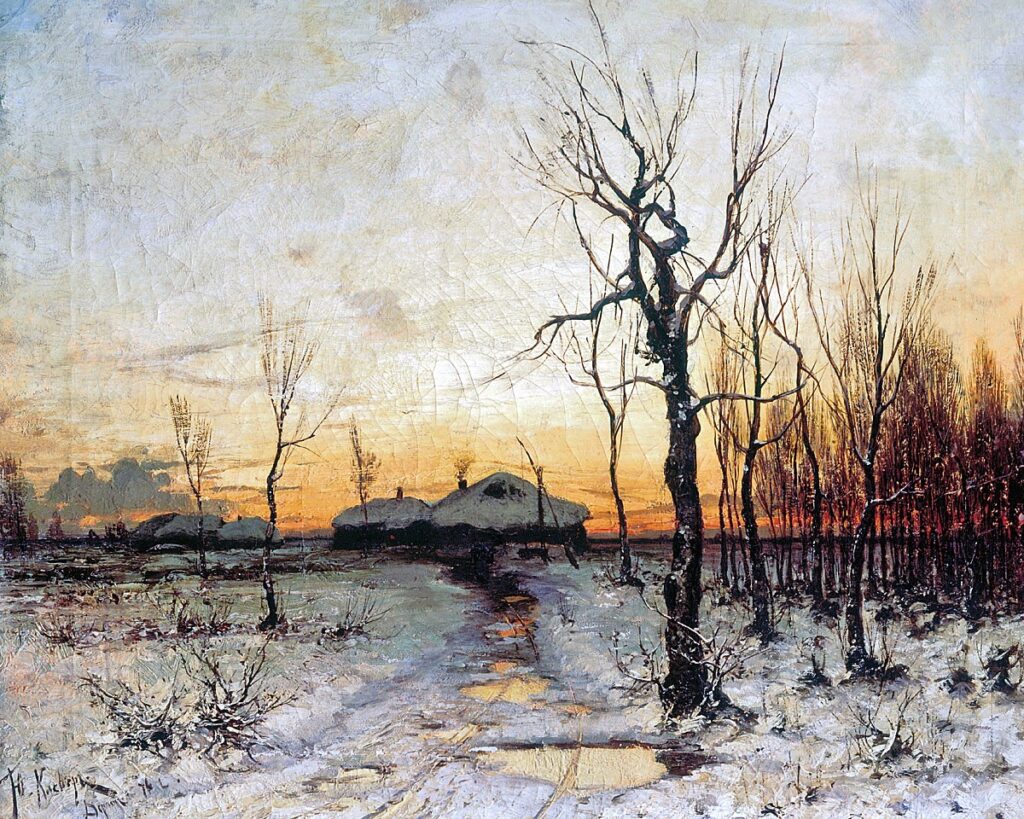
Poets use the verb ‘zerrinnen’ to evoke the sense of finality and completion hinted at as the sun sets:
Du heilig, glühend Abendrot!
Der Himmel will in Glanz zerrinnen,
So scheiden Märterer von hinnen,
Hold lächelnd in dem Liebestod.

Sacred, glowing sunset!
The sky wants to melt in a blaze.
Thus it is that martyrs leave this dimension,
With a beauteous smile in their love-death.

Schreiber, Das Abendrot	D 627
It does not make much sense in English to talk about the sky (or heaven) ‘vanishing’ or ‘disappearing’. Since Prospero, we prefer verbs like ‘melt’ or ‘dissolve’ to express this idea:
Our revels now are ended. These our actors,
As I foretold you, were all spirits and
Are melted into air, into thin air;
And - like the baseless fabric of this vision -
The cloud-capped towers, the gorgeous palaces,
The solemn temples, the great globe itself,
Yea, all which it inherit, shall dissolve,
And like this insubstantial pageant faded,
Leave not a rack behind.

Shakespeare, 	The Tempest Act IV (Arden 3 edition)
As in English, ‘melting’ (schmelzen) is used metaphorically in German in two areas: melting hearts and melting sighs.
The melting heart is so central to our thinking that we might even forget that the language is metaphorical. Novalis manages to remind us of this, though, in his complex Hymn about the mystery of the Eucharist.
Wenige wissen
Das Geheimnis der Liebe,
Fühlen Unersättlichkeit
Und ewigen Durst.
Des Abendmahls
Göttliche Bedeutung
Ist den irdischen Sinnen Rätsel.
Aber wer jemals
Von heißen, geliebten Lippen
Atem des Lebens sog,
Wem heilige Glut
In zitternde Wellen das Herz schmolz,
Wem das Auge aufging,
Dass er des Himmels
Unergründliche Tiefe maß,
Wird essen von seinem Leibe
Und trinken von seinem Blute
Ewig, ewiglich.

Not many people know
The secret of love,
Or have a feeling of insatiability
And eternal thirst.
The last supper's
Divine significance
Is a riddle for earthly minds;
But anyone who has ever
From hot beloved lips
Sucked up the breath of life,
Anyone who has experienced the holy glow
Melting their hearts in trembling waves,
Whoever has raised his eyes
In order to look at the sky
And measure its unfathomable depths,
That person will eat of his body
And drink of his blood
For ever and ever.

von Hardenberg (Novalis), Hymne I	D 659
That other standard poetic trope, the melting sigh, is equally difficult to grasp once we try to make sense of it.
Geuß nicht so laut der liebentflammten Lieder
Tonreichen Schall
Vom Blütenast des Apfelbaums hernieder,
O Nachtigall!
Du tönest mir mit deiner süßen Kehle
Die Liebe wach;
Denn schon durchbebt die Tiefen meiner Seele
Dein schmelzend Ach!

Do not pour them out so loudly those songs that are aflame with love
Making such a musically rich sound
As they come down from the blossoming branch of the apple tree,
Oh nightingale.
With your sweet throat you are striking a chord in me,
Awakening love,
Since a tremor is already rumbling through the depths of my soul:
Your melting 'Ah'.

Hölty (revised Voß), An die Nachtigall	D 196
Here the participle ‘schmelzend’ (Dein schmelzend Ach! Your melting sigh) could be translated as something like ‘mellifluous’, but the mystery of the metaphor remains. What is it that is flowing or melting (‘mellifluous’ literally means ‘flowing honey’)? Is it the sound of the nightingale or the emotions of the sensitive listener? Has something hard become liquid? Does the sound (the nightingale’s song or the poet’s sigh) actually cause or just give expression to an inner transformation?
☙
Descendant of:
WaterTexts with this theme:
- Amalia, D 195 (Friedrich von Schiller)
- An die Nachtigall (Geuß nicht so laut), D 196 (Ludwig Christoph Heinrich Hölty and Johann Heinrich Voß)
- Das Abendrot (Du heilig, glühend Abendrot!), D 627 (Aloys Wilhelm Schreiber)
- Hymne I, D 659 (Friedrich Leopold von Hardenberg (Novalis))